Piriformis Syndrome
Updated: Oct 15
By Andy Duckmanton, BOst (Hons), GOsC registered osteopath.
Editorial update: 15 October 2026.
Piriformis syndrome is a term used for symptoms attributed to irritation of the sciatic nerve near the piriformis muscle, deep in the buttock. It is one possible explanation for buttock and leg pain. Similar symptoms can come from the lower back, hip or other structures, so muscle tightness alone does not establish the diagnosis.
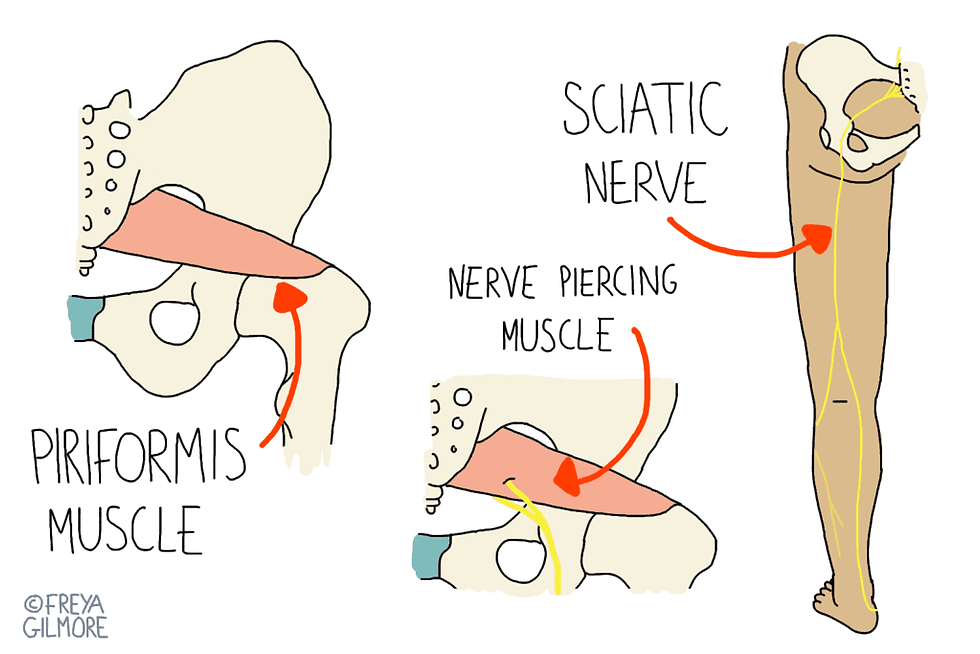
Causes and Symptoms
Symptoms may be aggravated by prolonged sitting or activities involving the hip. An assessment considers recent changes in activity, any injury and other possible causes. Symptoms that may be reported include:
Pain in the buttock, sometimes extending down the back of the thigh or leg.
Tingling or numbness in the affected leg.
Discomfort that changes with sitting, walking or other activities.
These symptoms are not specific to piriformis syndrome. New or worsening weakness, including difficulty lifting the foot, needs prompt medical assessment rather than being assumed to come from a tight muscle.
Similar symptoms can result from irritation of a nerve root in the lower back. The history and examination help guide which possibilities need further assessment; a pain diagram cannot distinguish them reliably.
Diagnosing Piriformis Syndrome
Assessment includes your symptom history and an examination of the back, hip and leg. Strength, sensation and reflexes may be checked where relevant. Movement tests may help reproduce familiar symptoms, but no single simple test proves that the piriformis is the cause. Further medical assessment may be needed to investigate other explanations.
Management
Management depends on the assessment and may include adjusting aggravating activities, a gradual exercise programme and suitable hands-on care. The aim is to help you manage symptoms and improve function. Treatment does not guarantee that pressure on a nerve has been removed or that symptoms will resolve.
Advice and exercises should be tailored to your abilities and reviewed as symptoms change. Seek further assessment if symptoms worsen or do not improve. For broader information about pain travelling down the leg, see our sciatica guide.
Go to A&E or call 999 if back or leg symptoms include sciatica on both sides, severe or worsening weakness or numbness in both legs, numbness around the genitals or bottom, or new difficulty controlling or passing urine or controlling bowel movements. These can be signs of a serious spinal problem. See the NHS sciatica guidance for details. Do not wait for a routine appointment.